

If you’re a procurement manager overseeing production in China, you’ve likely wrestled with a simple but high-stakes question: when is piece-by-piece (100%) inspection worth the time and cost compared to AQL sampling?
In my experience running QC programs for SMEs in electronics, home goods, apparel, and hardware, the answer depends on your risk tolerance, the nature of defects you can or can’t accept, and how well you integrate inspection with corrective action and shipping.
This guide gives you a practical, end-to-end framework: definitions and standards, where 100% inspection makes sense, how to execute it efficiently in China, defect classification, documentation, CAPA integration, and hybrid strategies—plus realistic cost/lead-time ranges and mitigation tactics.
Definitions and standards: 100% vs AQL sampling

You’ll see two main approaches in China production:
- Piece-by-piece (100%) inspection: Every unit is inspected against your criteria. It’s common when the tolerance for defects is effectively zero (for safety-critical or premium brand-protective products). Industry explainers lay out the trade-offs clearly, such as the distinctions discussed in the 2025 overview of AQL vs full inspection by Testcoo, referenced here as a comparative guide.
- AQL acceptance sampling: You inspect a statistically determined sample to accept or reject the lot based on your Acceptable Quality Level (AQL). The method is standardized and widely used in supply chains, with inspection levels and sample sizes defined by ISO 2859-1 / ANSI/ASQ Z1.4. A practical, readable primer is the 2025 Insight Quality explainer on AQL, and enterprise documentation like Microsoft Learn’s acceptance sampling (2025) clarifies implementation in ERP/QMS contexts.
A few standard concepts to align on:
- Defect classes often used in consumer goods:
- Critical: Safety/regulatory defects; typically zero tolerance.
- Major: Function/usability impacted.
- Minor: Cosmetic; highest tolerance. Insight Quality’s 2025 overview and QIMA’s AQL guide explain these conventions clearly.
- Inspection levels: General levels I/II/III (II is common default) and Special levels S-1–S-4 affect sample sizes for AQL. Switching between normal, tightened, or reduced inspection depends on ongoing supplier performance. The Quality Magazine 2024 history of ANSI/ASQ Z1.4 and conference materials by Steve Geneva (2023) provide background and switching logic context.
References for this section:
- Insight Quality – What is AQL? (2025) – accessible primer on AQL and defect classes: Insight Quality AQL overview
- Quality Magazine (2024) – historical context for ANSI/ASQ Z1.4: Brief history of ANSI/ASQ Z1.4
- Microsoft Learn (2025) – enterprise acceptance sampling implementation: Acceptance sampling in supply chain
- QIMA (2025) – AQL overview and typical defect classification examples: Acceptable Quality Limit overview
- Testcoo (2025) – vendor explainer comparing AQL and full inspection: AQL vs Full Inspection comparison
When to use 100% inspection vs AQL sampling
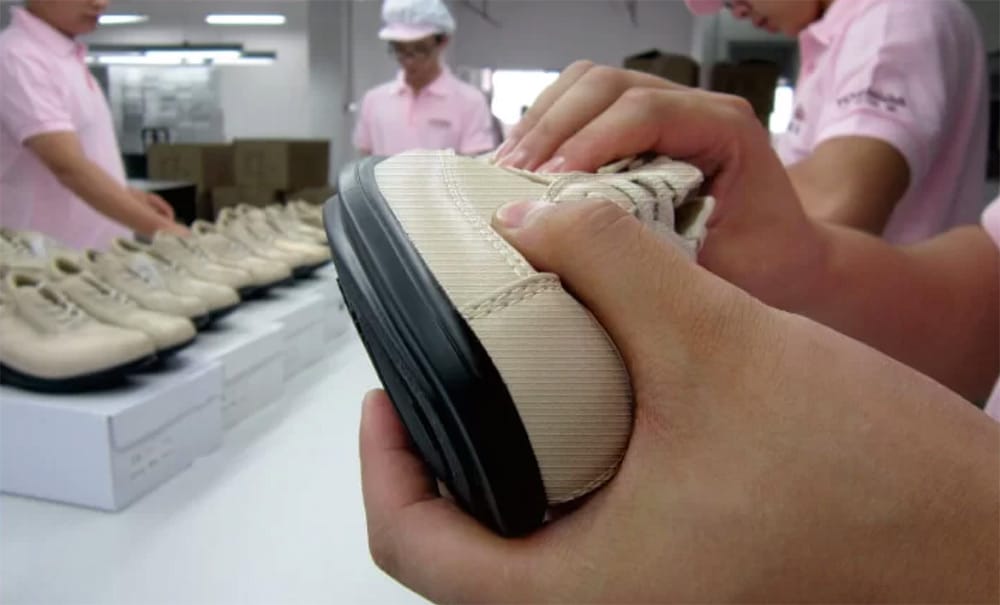
Here’s the decision framework I use with SMEs. Start with your risk profile, then apply cost/lead-time constraints.
Choose 100% inspection when:
- The product is safety-critical or legally controlled (e.g., electronics with electrical safety risks, toys with small parts, certain building components). Vendor and practitioner explainers like AQI Service’s 2024 piece-by-piece definitions describe these cases.
- High-value units where each defect is costly, or premium brand launches where any defect damages reputation.
- Supplier ramp-up, new tooling, or recent process changes where variability is high.
- Known systemic defect risks (e.g., past escapes in labeling/barcoding, critical functional failures).
Choose AQL sampling when:
- Volumes are high with some defect tolerance, and the process is stable.
- You need statistically controlled acceptance with practical lead times.
- You have layered inspection (in-line + PSI), and you keep tightened switching rules for weaker suppliers.
Two clarifications worth repeating:
- 100% visual inspection is not equal to 100% defect detection. Human factors limit detection rates; industry guidance (BioPhorum, 2023) emphasizes this caveat.
- AQL sampling is not “lower quality control;” it’s a statistical method tied to known risk and switching rules. Enterprise docs like Microsoft Learn (2025) reflect how it’s implemented correctly.
References for this section:
- AQI Service (2024) – definitions of piece-by-piece/full inspection: Piece-by-piece inspection in Asia
- Testcoo (2025) – comparison of AQL vs full inspection: AQL vs Full Inspection
- Insight Quality (2025) – AQL primer and switching rules context: AQL overview
- BioPhorum (2023) – why 100% visual ≠ 100% detection: 100% visual inspection does not mean 100% detection
Practical workflow in China: step-by-step
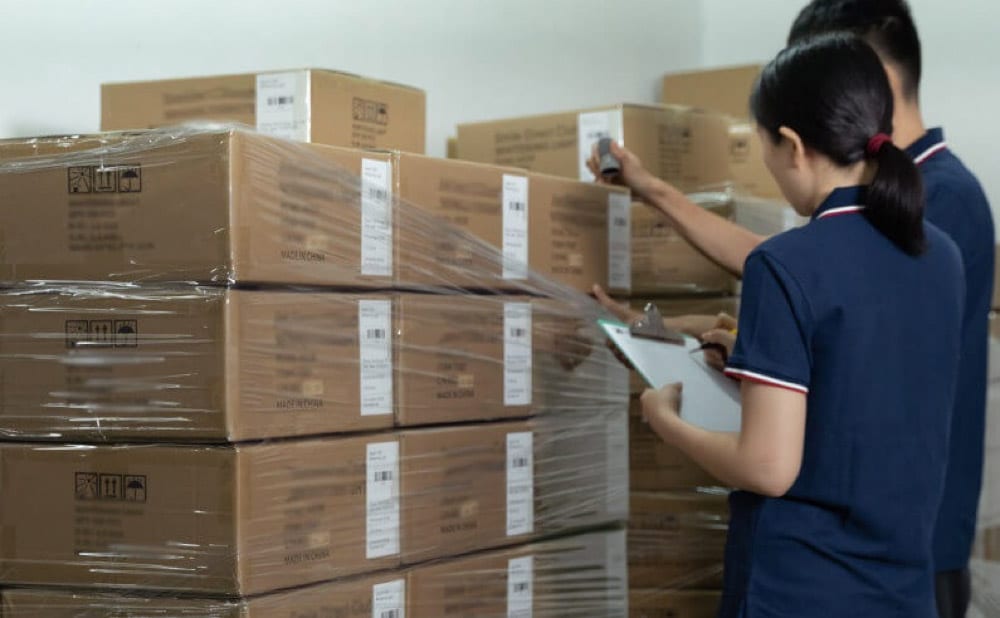
You can run 100% inspection at the factory or at an off-site QC center. The workflow below balances rigor with speed.
- Preparation
- Lock specifications: Drawings/tolerances, functional test procedures, labeling/pack-out requirements.
- Define defect taxonomy per SKU: critical/major/minor, with photo examples.
- Control golden samples: Sealed, signed references for inspectors and factory.
- Set fixtures and tools: Go/no-go gauges, jigs, multimeters/test benches, barcode scanners, CMM or optical metrology as needed.
- Plan staffing and stations: Calculate throughput; set parallel stations if needed.
- Execution (piece-by-piece)
- Inspect every unit against the checklist. Tag defects; segregate fail bins.
- Rotate inspectors to reduce fatigue. Maintain station 5S standards.
- Capture photo/video evidence for each defect type; record lot IDs.
- Reporting
- Daily summary with counts by defect class; attach photos/videos.
- Bilingual reporting (English/Chinese) to eliminate ambiguity.
- Maintain traceability: unit/lot serials, time stamps, inspector IDs.
- Triage and corrective action
- Agree on rework or part replacement with the factory.
- Document root cause and preventive actions.
- Re-inspection and release
- Verify rework closure. Record re-inspection results.
- Set shipment release gates contingent on defect thresholds and CAPA completion.
Neutral micro-example for context (tooling-heavy consumer electronics):
- A procurement team organizes off-line 100% inspection for 8,000 smart plugs after discovering labeling and continuity test escapes. A third-party QC group sets up six stations (two for labeling/barcode verification; four for continuity and earth leakage tests), rotates inspectors every 90 minutes, and logs defects with photo evidence. After rework and re-inspection, units are kitted to FBA-ready standards and consolidated for shipment.
First mention and disclosure:
- In similar scenarios, partners use Yansourcing to set up stations, coordinate bilingual reporting, and manage rework and FBA/3PL prep end-to-end.
Cost and lead-time impacts—and how to mitigate

Let’s be candid: 100% inspection adds cost and time. Plan proactively.
Indicative inspector-day rates in China (subject to scope and region):
- Many providers quote roughly $150–$350 per inspector-day for product inspections; specific vendors cite around $309 per man-day. These are practitioner ranges and vary widely by product, location, and service package.
Throughput practice ranges (highly dependent on test complexity):
- Apparel/textiles: several hundred to ~1,000 units per inspector-day for visual checks.
- Electronics: functional tests constrain speed; roughly ~200–500 units per inspector-day.
- Hardlines/home goods: mid-range depending on safety/functional tests.
Mitigation tactics
- Parallelize: Add stations and shifts to compress calendar time.
- Pre-sort: Have the factory segregate obviously defective units to accelerate 100% checks.
- Clarify work instructions: Photo-rich checklists reduce decision time per unit.
- Use fixtures: Go/no-go gauges and jigs increase consistency and speed.
- Rotate inspectors: Reduce fatigue-driven misses.
References for cost and practice context:
- Testcoo (2024/2025) – market summaries of third-party inspection companies and rates: Top inspection companies + rates
- Sermondo (2024) – pricing examples compiled for inspection providers: Third-party inspection companies pricing
- HQTS (2024) – AQL calculator for sampling scenarios: AQL calculator
Defect taxonomy and acceptance criteria (examples)
Below is a practical taxonomy you can adapt per SKU. Align these with your specifications and standards.
| Class | Examples | Typical Tolerance |
|---|---|---|
| Critical | Electrical safety failure; choking hazard; sharp edge causing injury; illegal labeling; counterfeit component | Zero tolerance; triggers lot hold and CAPA |
| Major | Non-functioning button; incorrect dimensions causing assembly interference; paint peeling; missing accessory | Low tolerance; limited rework allowable |
| Minor | Cosmetic scratch; slight color variance within brand limits; small print smudge | Highest tolerance; often rework not required |
Pack-out and labeling checks
- Carton integrity; drop/stack readiness.
- Barcodes (UPC/EAN/FNSKU) scannability and placement.
- Retail/online channel-specific labels and warnings.
Documentation and evidence that stand up to audits

Your documentation is your safety net.
- Inspection checklist: Photo-rich steps and defect examples; per-SKU version control.
- Golden sample control: Sealed, signed references; periodic re-verification.
- Photo/video evidence: Attach to each report; organize by defect class.
- Lot traceability: Serial numbers, time stamps, station IDs.
- Bilingual reports: Reduce misinterpretation; consistently translate technical terms.
- FBA/3PL prep touchpoints: For Amazon, check official requirements—e.g., the 2025 bagging guidance states poly bags with ≥5-inch openings must carry a suffocation warning and meet visibility/barcode rules, detailed in Amazon Seller Central bagging requirements.
Sources and practical guides:
- QualityInspection.org (2025) – examples of quality inspection checklist structure: Inspection checklist examples
- QualityInspection.org (2024) – supplier transparency practices and traceability in China: Supplier transparency for China-made products
Corrective action (CAPA) integration
Inspection without action doesn’t protect your brand. Close the loop.
- Triage: Quantify defects by class; isolate suspect lots.
- Root cause: Analyze process steps; confirm with the factory.
- Corrective actions: Rework, part replacement, process change, operator retraining.
- Preventive actions: Update work instructions; add fixtures; tighten incoming material checks.
- Re-inspection: Verify closure and update reports.
- Release gates: Define shipment criteria linked to CAPA completion.
Practical frameworks and supporting materials:
- QMS practices highlight maintaining a CAPA plan, re-inspection report, and, when needed, a Certificate of Conformance alongside logistics documents (packing list, BOL, commercial invoice).
Risk controls that matter in China operations
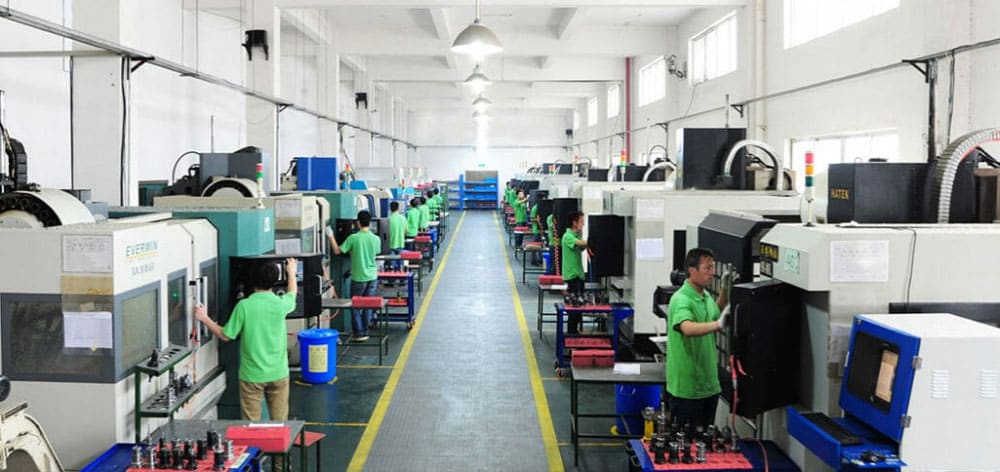
- Golden samples & sealed references: Control custody and access; re-verify periodically.
- Change control: Require formal supplier notification; use First Article Inspection after any change; document approvals.
- Counterfeit avoidance: For electronics/materials, frameworks like SAE AS5553 and SAE AS6174 set expectations for procurement controls, inspection/testing, traceability, and disposition of suspect parts. The U.S. DoD’s 2024 guidance consolidates compliance practices, and EPA procedures (2023) provide steps for detecting counterfeit ICT products.
- Inspector rotation: Reduce fatigue and bias; spot checks by supervisors.
- Automation aids: Where feasible, AOI, barcode verification, and optical metrology improve consistency.
References for risk controls:
- DoD (2024) – producibility/manufacturability guidance referencing AS5553/AS6174 practices: DoD Producibility & Manufacturability Guide
- EPA (2023) – counterfeit detection procedure for ICT products: EPA counterfeit detection procedure
Alternatives and hybrid strategies
Most SMEs won’t run 100% inspection forever. Scale smartly.
- Tightened/reduced AQL: Apply switching rules based on supplier performance under ISO 2859-1 / ANSI/ASQ Z1.4. Tightened for higher risk; reduced for proven stability.
- Skip-lot procedures: For highly reliable suppliers, inspect less frequently while maintaining control; Insight Quality (2025) and enterprise QMS docs (Oracle, 2024/25) describe these approaches.
- Layered inspections: Combine in-line checks, PSI (pre-shipment inspection), and partial 100% on critical features/components. HKTDC’s 2024 guidance and practical blogs outline why layered QC is effective.
References for hybrid strategies:
- Insight Quality (2025) – skip-lot inspections explained: Skip-lot inspections
- Oracle Fusion Cloud SCM (2024/25) – quality management usage including skip-lot concepts: Using quality management (PDF)
- HKTDC (2024) – tips on pre-shipment inspections: Pre-shipment inspections tips
Practical tools and templates

- AQL calculator: Quickly determine sample sizes and acceptance numbers—try HQTS’s 2024 calculator: AQL calculator
- Inspection checklist/report format: Use photo-rich checklists specifying defect classes and pass/fail criteria. For inspiration, see QualityInspection.org’s examples and Procore’s inspections tool for photo-required workflows.
- Defect taxonomy: Build sku-specific catalogs aligned with critical/major/minor definitions. Update tolerances after each CAPA cycle.
References:
- QualityInspection.org (2025) – checklist examples: Inspection checklist examples
- Procore (2025) – inspections tool documentation (examples of photo-required templates): Project-level inspections tool
FAQs
1. Is 100% inspection always better than AQL sampling?
No. It reduces defect escape risk but increases cost and lead-time. Use it when your tolerance is near zero or risk is high. For stable processes, AQL with tightened rules and layered checks often meets requirements.
2. Where should 100% inspection happen?
Typically at the factory’s finished goods area or at an independent QC center. In-line checks can catch issues earlier and reduce rework.
3. Can we guarantee zero defects with 100% visual inspection?
No. Human detection is imperfect; consider automation where feasible and maintain inspector rotation and controlled references.
4. How do we keep costs under control?
Parallelize stations, use fixtures and clear checklists, have the factory pre-sort, and integrate CAPA to prevent recurrence.
Next steps
If you want a practical plan tailored to your SKU mix and risk profile—inspection scope, station setup, rework and re-inspection cadence, and FBA/3PL-ready prep—book a free 15-minute consultation to scope an inspection + rework plan.
