
Commercial entryways are where slip complaints spike and liability escalates fast.
If you import tiles from China for wet foot traffic areas, the safest path is a tight testing-and-QA routine aligned to the three biggest buyer regions: the United States, the European Union, and Australia/New Zealand.
Below is a practical, spec-ready tutorial you can apply to keep projects compliant and defensible.
Quick regional compliance map for wet entryways

The targets below reflect common spec practice for wet, level commercial floors. Always confirm project-specific conditions, contaminants, and local codes.
| Region | Primary test method | Typical wet entryway target | Notes |
|---|---|---|---|
| United States | ANSI A326.3 (BOT-3000E) | DCOF ≥ 0.42 baseline | A326.3 is the method; ≥0.42 is widely used for wet interiors. Higher expectations (≥0.50–≥0.55) appear in some specs for IW+/EW contexts—treat as project guidance, not a universal mandate. See TCNA/ANSI resources. |
| European Union | EN 16165 pendulum (IRHD 96) | PTV ≥ 36 (low slip risk) | DIN 51130 R-classes (R9–R13) are still referenced in many specs. Pendulum is preferred for in-situ checks. EN 14411 is the EU ceramic tile product standard and is often cited alongside slip testing to complete compliance documentation. |
| Australia/New Zealand | AS 4586 pendulum (new surfaces) / AS 4663 (existing) | P3 minimum; P4 for higher risk or ramps | Follow local handbooks and building accessibility references; re-test in service for high-traffic sites. |
- United States: See the TCNA summary of ANSI A326.3-2021 and the cautionary context in ANSI’s overview of wet DCOF.
- European Union: EN 16165 harmonizes methods; UKSRG/HSE support pendulum interpretation. See UKSRG pendulum introduction.
- Australia/New Zealand: Pendulum classifications per AS 4586 for new materials and AS 4663 for existing surfaces. See Slip testing AU.
Methods that matter (and when to use each)
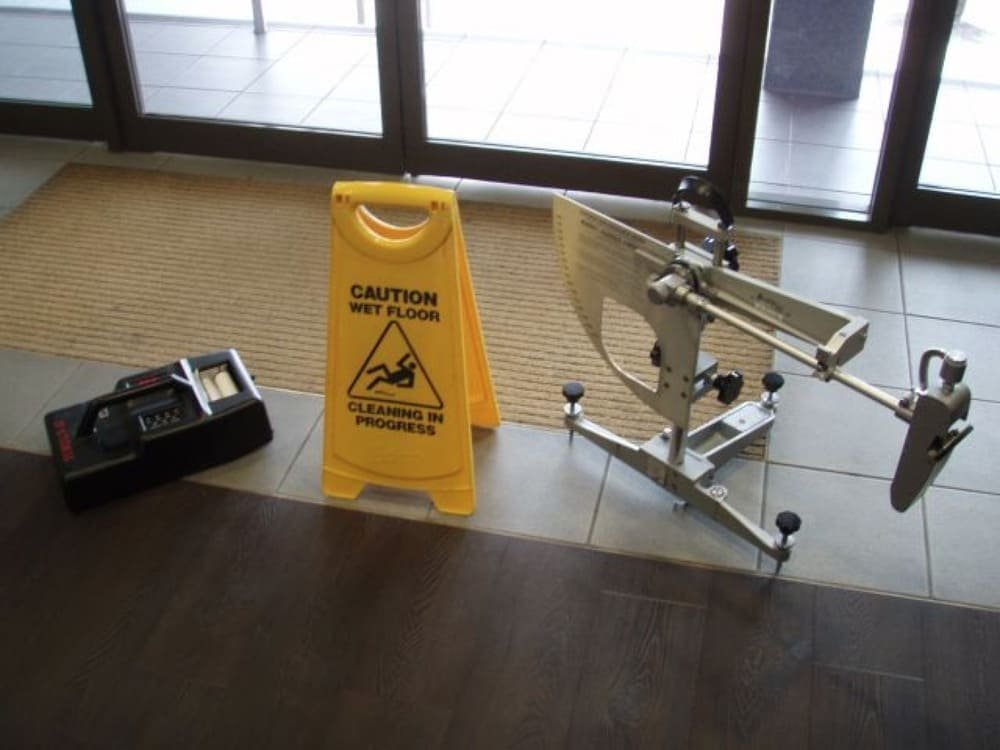
Think of methods like tools in a kit—use the one that matches the region and the decision you need to make.
- ANSI A326.3 with BOT-3000E (US): Wet DCOF measurement for hard surface flooring. It’s the defined method; treat ≥0.42 as a common baseline for wet level interiors. The standard warns DCOF is comparative and does not predict accidents. See TCNA’s A326.3 resources.
- EN 16165 pendulum (EU) and AS 4586/4663 pendulum (AU/NZ): Preferred for in-situ checks; IRHD 96 slider for shod conditions in entryways. PTV ≥36 is commonly interpreted as low slip risk in wet conditions per UKSRG/HSE.
- DIN 51130 ramp (EU practice): R-classes (R9–R13) based on critical angle with shod footwear; still widely referenced in occupational/commercial specs. Use alongside EN 16165 context.
Step-by-step testing workflow you can run every time
Step 1: Pre-order sample vetting
Request a manufacturer report aligned to the destination market and verify key details before you place a PO.
- Method and device: A326.3 BOT-3000E (US), EN 16165 pendulum (EU), AS 4586 pendulum (AU/NZ). For barefoot areas, switch sliders/methods accordingly.
- Slider type (pendulum): IRHD 96 for shod entryways; confirm calibration history.
- Lab accreditation: Prefer ISO/IEC 17025-accredited labs; ensure report shows accreditation.
- Surface condition: Wet, contaminant type if applicable; specimen description; finish/texture.
- Product use classification (US): If declared per A326.3, use it as guidance, but still assess fit for your site conditions.
If your entryway risk is high, run an internal check on the sample: BOT-3000E (US) or pendulum (EU/AU). TCNA notes that DCOF comparisons don’t predict accidents; use results to compare surfaces and make informed selections.
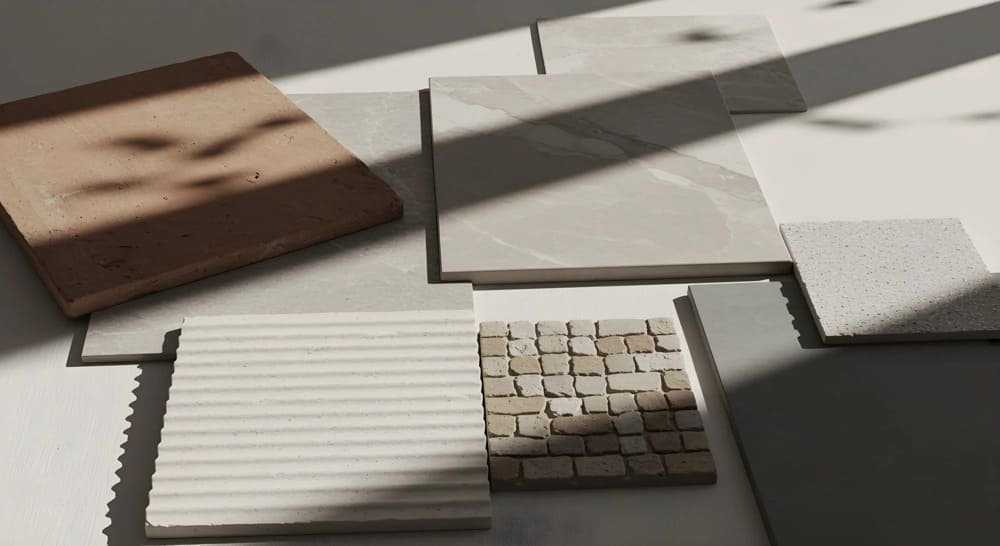
Step 2: Pre-shipment batch testing
Lot-to-lot variation is the silent failure mode. Tighten batch controls before tiles leave the factory.
- Sampling plan: Test multiple tiles per production lot; scale sample count by lot size and risk level. Retain reference tiles for each lot.
- Accredited testing: Send samples to an ISO/IEC 17025 lab using the region’s method (BOT-3000E for US; pendulum Slider 96 for EU/AU entryways).
- Report integrity: Tie the test report to your lot ID; include method, device, slider, calibration, test date, conditions, measurements/averages, and pass/fail criteria.
For EU/AU, UKSRG/HSE recommend multi-direction measurements and regular device verification; for US, follow A326.3 set-up with BOT-3000E.
Step 3: On-arrival or pre-install field checks
Wet entryways live in the real world—shipping dust, site cleaners, and installation variables can shift slip performance.
- US: Run BOT-3000E measurements per A326.3 on representative areas before opening to the public.
- EU/AU: Conduct pendulum tests (Slider 96) in-situ on finished surfaces; repeat after major maintenance changes.
- Re-testing cadence: For high-traffic entryways, consider annual to 1–3 year intervals depending on risk and incident history.
Batch consistency and QC controls that prevent DCOF/PTV drift
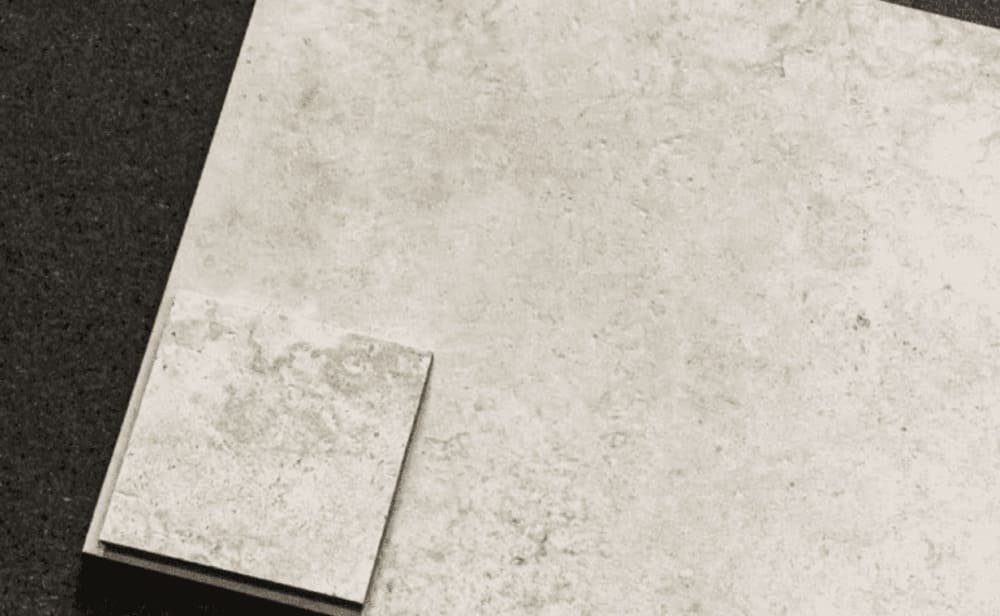
- Control finishing: Lock down glaze formula, microtexture, lapping/polishing passes, and firing parameters that affect surface roughness.
- Define slip resistance as a controlled characteristic: Include it in QC checkpoints alongside water absorption and dimensional stability.
- Retain tiles and records: Keep per-lot retains; archive reports tied to lot IDs; verify future lots against retains.
Maintenance can make or break slip resistance
A shiny film from the wrong cleaner can drop performance overnight.
- Cleaning chemistry: Specify non-film-forming detergents; avoid waxes and sealers unless proven not to reduce DCOF/PTV.
- Contractor training: Provide instructions and forbid unapproved products; re-test after any program change.
- Documentation: Keep maintenance logs and pair them with periodic test results.
UKSRG and HSE emphasize cleaning effectiveness and periodic testing in service.
Documentation checklist (copy and adapt)
- Test standard/method (A326.3, EN 16165 pendulum, DIN 51130, AS 4586/4663)
- Device/model and configuration (BOT-3000E; pendulum type)
- Slider type and calibration history (IRHD 96; Slider 55/57 for barefoot if applicable)
- Lab accreditation (ISO/IEC 17025) and report date
- Surface condition (wet; contaminant type) and specimen description
- Batch/lot ID and number of tiles tested
- Individual measurements and averages; directional notes (for pendulum)
- Pass/fail criteria referenced to spec or project requirements
Practical example workflow (with coordination support)
Disclosure: Yansourcing is our product.
- You shortlist three porcelain textures for a national retail entryway program. Samples arrive with A326.3 and EN 16165 reports.
- Internal checks confirm two surfaces meet ≥0.42 DCOF (US) and ≥36 PTV (EU/AU) on wet level floors.
- You lock one finish and write slip resistance into the quality plan. Production starts at a vetted factory, and per-lot samples go to an ISO/IEC 17025 lab.
- Reports are tied to lot IDs, and retain tiles are stored. On arrival, you run BOT-3000E (US store set) and pendulum checks (EU/AU sites) before installation.
- Maintenance plans specify non-film-forming cleaners, and you schedule annual re-testing for flagship stores.
If you need help coordinating factories, pre-shipment tests, and documentation, Yansourcing supports factory sourcing, batch QA, and third-party slip resistance testing.
Procurement clause snippets you can paste
- “Slip resistance shall be verified per regionstandardregion standardregionstandard using accredited testing (ISO/IEC 17025). Reports must list method, device, slider, surface condition, batch/lot ID, measurements/averages, and pass/fail criteria.”
- “Manufacturer declares product use classification per ANSI A326.3; purchaser reserves right to verify with BOT-3000E and/or pendulum testing. Variance from approved sample may trigger rejection.”
- “Cleaning products must be non-film-forming and approved by the purchaser. Any change in maintenance requires re-testing of slip resistance.”
FAQ: Common failure scenarios and recovery option
- “My approved sample passed, but production failed.” Likely finish or firing drift. Pause shipments, tighten controls, and re-run lot tests. Compare to retain tiles.
- “Entryway feels more slippery after cleaning.” Residual film is common. Switch to non-film-forming detergents, deep clean, and re-test.
- “Which method for EU/AU field checks?” Pendulum (IRHD 96) is preferred in-situ for entryways; use BOT-3000E for US A326.3 contexts.
- “Do I need DIN ramp testing?” Where ramp angles or occupational footwear are central, ramp classes (R10/R11) are often specified. Use alongside EN 16165.
Next steps
Ready to source tiles that meet US/EU/AU/NZ slip requirements—and have the testing paperwork to prove it? Request a sourcing quote and coordinate pre-shipment slip resistance testing with our team:
- Factory sourcing for commercial tiles: Yansourcing building materials
- QA, inspection, and logistics support: Yansourcing services
- Project packages for complex builds: Design-to-China building materials sourcing
