

If you hold the budget and the opening date, you don’t need “a supplier”—you need someone to manage China for you.
This guide maps the owner’s critical path from mock-up room to installation-ready delivery, so you can open on time without rework or surprise costs.
If you choose to work with a coordinator, Yansourcing can support owner-led FF&E projects in China with one-on-one management across factories, QA/QC, compliance, and logistics.
The Critical Path: Owner’s View from Mock-Up to Handover

When hotel projects slip, it’s rarely because furniture “can’t be made.” Delays come from weak mock-up discipline, multi-factory misalignment, and logistics that don’t match site readiness. Think of the process as gated milestones:
- Mock-up room: finalize finishes and acceptance criteria.
- Factory split and alignment: assign scopes, lock master samples, unify labeling/packaging.
- Bulk production: staged QA/QC (during-production and pre-shipment) using AQL sampling.
- Compliance verification: collect and check documents for emissions, flammability, and performance standards.
- Booking and shipping: select Incoterms, build buffers, and sequence deliveries.
- On-site staging and installation: room-by-room labeling, coordination with other trades.
- Acceptance and handover: punch lists, sign-offs, and warranty packs.
A practical timeline for a midscale 150–250 room project often looks like this
(your design/brand standards may shift durations):
- Mock-up: 3–5 weeks (including corrective actions)
- Bulk production: 8–12+ weeks depending on factory loads and materials
- Ocean transit and customs: 4–7+ weeks door-to-door depending on route and season
- On-site staging and install: 2–6 weeks, sequenced by floors/zones
- Logistics buffer: add a 20–25% buffer on logistics durations for congestion, inspections, or weather
Those ranges reflect typical ocean shipping variability noted by industry trackers like the
Flexport Ocean Timeliness Indicator
and macro indexes such as
e2open’s Ocean Shipping Index (Q4 2024).
Mock-Up Room: How to Achieve One-Pass Approval
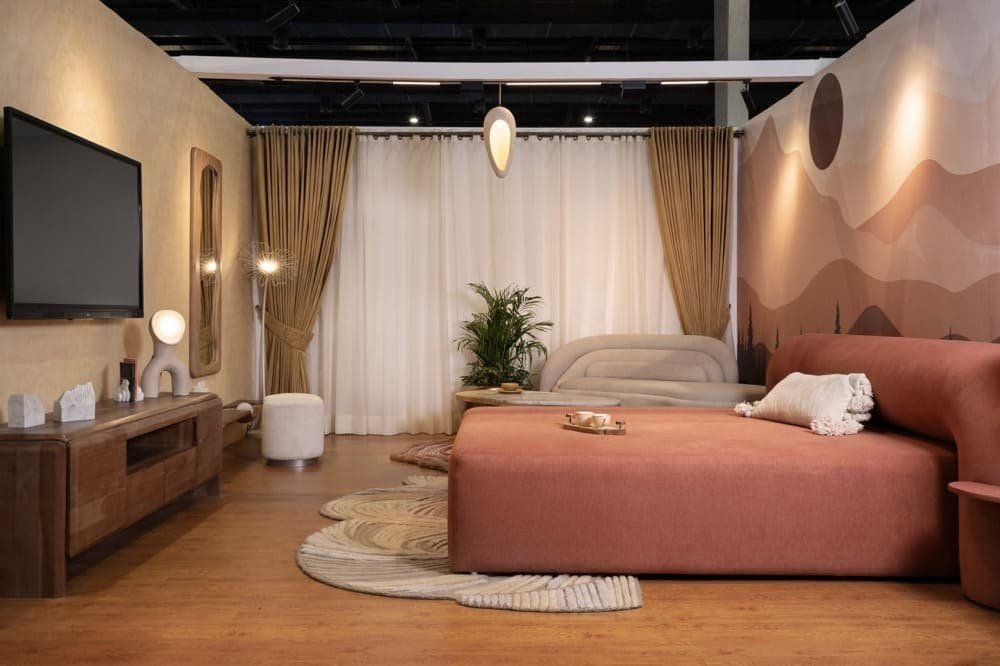
Mock-up is your risk kill-switch.
A well-run mock-up compresses decision cycles and codifies finishes for bulk production.
What the factory needs before cutting material:
- A clear spec book with drawings, dimensions, hardware, and finishes
- Master finish samples for veneer, laminate, stain, powder coat, fabrics, and foams
- Brand standards that frame durability, cleanability, and indoor air quality expectations such as GREENGUARD
- Explicit acceptance criteria covering cosmetic tolerances, functional tests (drawer alignment, wobble, comfort), and on-site fit dimensions
The right workflow builds the mock-up room as a full system—casegoods, seating, and any lighting interfaces—rather than isolated pieces.
Inspect against your acceptance criteria, record deviations with photos, assign corrective actions with a firm turnaround, then re-inspect. Once approved, freeze master samples and label them with batch codes for cross-factory matching.
Compliance callouts you’ll want locked at mock-up:
- Upholstered seating should meet California’s TB117-2013 smolder resistance.
The standard was adopted nationally by the U.S. Consumer Product Safety Commission in 2021; labels and documentation are required per
CPSC guidance and
BHGS regulatory text. - Composite wood (MDF, particleboard, plywood) must comply with U.S. EPA TSCA Title VI, aligned with CARB Phase 2 emission limits; verify certificates and labeling per
EPA’s formaldehyde program FAQs and
CARB’s composite wood products program. - If your brand specifies low-VOC emissions, ask for UL GREENGUARD / GREENGUARD Gold certificate numbers and verify them against UL listings, per
UL’s program overview.
Owner’s pass gate, in short:
Define and document acceptance criteria;
approve finishes with master samples and freeze them;
and close corrective actions within a clear window (often 7–10 days) before authorizing bulk production.
Splitting Scopes Across Multiple Factories—Without Losing Control
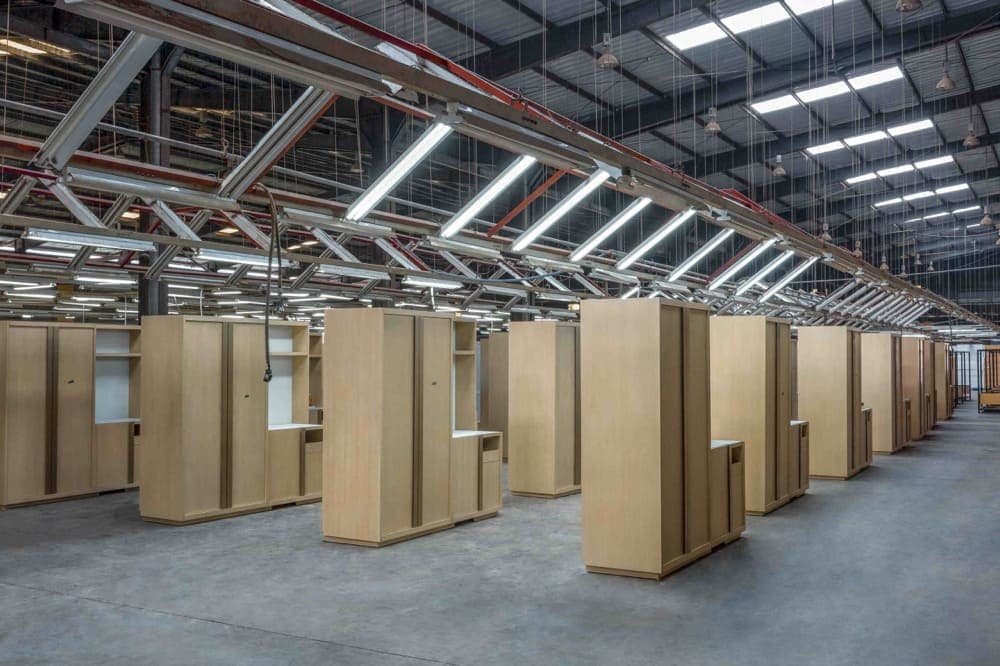
Few China factories excel in everything. You’ll often split scopes across casegoods, seating/upholstery, metalwork, and lighting accents.
The risk is finish drift and inconsistent quality, so your control plan matters.
Start with a selection matrix that assigns factories by capability, hospitality references, and capacity.
Preserve cross-factory finish fidelity by:
- maintaining a master sample library,
- requiring Certificates of Analysis for finishes, and
- using batch coding and spectrophotometer checks when shade consistency is critical.
Unify the packaging, labeling, and barcoding SOPs so every carton and pallet works with your room-by-room kitting plan.
For QA/QC, apply ANSI/ASQ Z1.4 attribute sampling.
Many hospitality buyers set AQLs such as:
- Critical 0.0
- Major 2.5
- Minor 4.0
under General Inspection Level II with normal severity — then adjust based on risk and supplier history.
For clear primers, see:
Define your defect taxonomy up front:
- Critical: structural failure, sharp edges
- Major: functional misalignment, out-of-tolerance dimensions
- Minor: cosmetic scratches, stitching pulls
A coordinator’s role (neutral example):
A 160-room project splits casegoods to Factory A, seating to Factory B, and metal bases to Factory C.
The coordinator:
- runs a finish-matching workshop using master samples,
- locks packaging/labeling SOP across factories,
- schedules during-production inspections at 30–50% completion, and
- pushes corrective actions within a week to keep the install window intact.
Disclosure reminder:
Yansourcing is our product and can act as the coordinator described above.
Compliance, Performance, and Documentation: What You Need by Region
Below is a compact view of common references project owners ask for. Always confirm the exact standards your brand or local code requires.
| Region | Emissions | Flammability | Performance |
|---|---|---|---|
| United States | TSCA Title VI (aligned with CARB Phase 2); labeling per EPA/CARB | TB117-2013 smolder resistance for upholstered furniture; labels per CPSC/BHGS | ANSI/BIFMA X5.x for seating/tables/casegoods (project-specific) |
| European Union | EN 717-1 E1 chamber test; REACH for chemicals | Project/brand specs; national fire rules vary | BIFMA often accepted; EU norms may apply by product |
| United Kingdom | E1-equivalent emissions limits; import documentation | BS 7176 (non-domestic seating) referencing BS 5852 methods | BIFMA + UK/BS performance specs by project |
Verification tips: collect test reports with lab names, dates, sample IDs, and methods; check labels for TB117-2013 and TSCA Title VI/CARB. For GREENGUARD, verify certificate numbers and product configurations in UL’s directory, per UL GREENGUARD guidance. For BIFMA, reference current standards and reaffirmations in BIFMA’s standards overview.
Logistics That Match Your Installation Window

Your logistics plan should serve the install schedule, not the other way around.
Incoterms define who does what and where risk transfers.
Practically, FOB gives you control over ocean freight and insurance, with risk transferring at origin once goods are loaded, per ICC’s Incoterms 2020 overview.
CIF pushes freight booking and minimum insurance to the seller while risk still transfers at origin; negotiate stronger insurance for damage-prone furniture.
DAP delivers to your named place with you handling import clearance and duties.
DDP includes export and import clearance and duties by the seller, but it’s complex for China exports due to destination liabilities.
Expect variability by route and season; recent medians show longer durations to U.S. East Coast and North Europe.
Industry trackers like Flexport’s OTI and reports such as e2open’s ocean index reflect these swings.
To keep installations on track:
- Choose Incoterms that match your risk appetite and coordination capacity
- Build a 20–25% buffer on logistics durations
- Favor FCL to reduce consolidation delays
- Align phased deliveries with site readiness by floor or zone
Packaging should be installation-ready:
- Specify ISTA protocols (often 3A/3B) for vibration, drop, and compression performance per ISTA’s design and testing resources
- Use durable room-by-room labeling tied to floor plans
- Barcode pallets
- Protect edges with EPE foam and corner guards
Contextual support:
For multi-factory coordination and turnkey readiness in hotel FF&E projects in China, see our service overview for hotel FF&E projects in China.
Phased Deliveries, On-Site Staging, and Final Acceptance
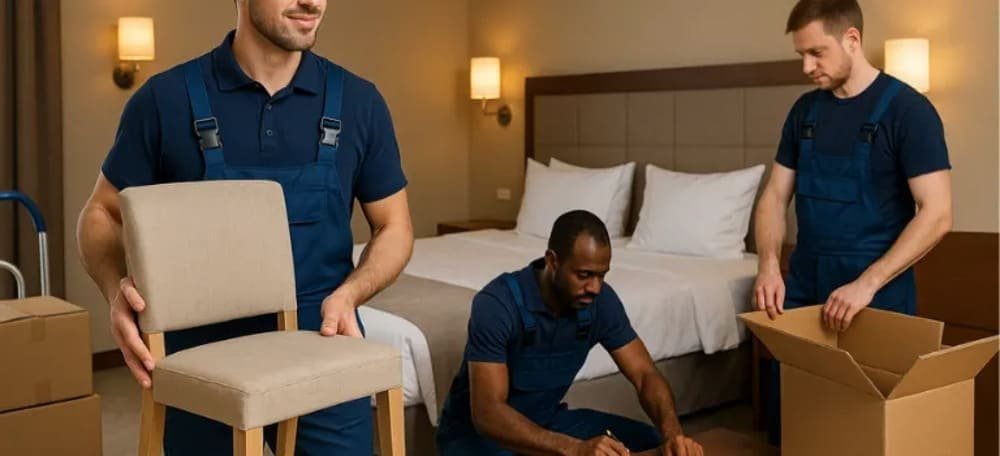
Installation should feel like assembling a well-labeled kit, not a scavenger hunt.
Sequence deliveries by floors or zones and coordinate with other trades—carpet, wallcovering, electrical—so rooms turn over cleanly.
On site, designate protected staging areas, maintain live inventory logs, and keep finished goods away from active construction zones.
Every carton and pallet should carry room-by-room codes aligned to your FF&E schedule, with clear team-lift labels, weight markings, and pre-checked access routes for safe handling.
Before you sign off, run pre-install inspections on casegoods and seating and capture any defects with photos and assigned corrective actions.
After installation, conduct room walkthroughs to verify function, safety, and brand alignment, then finalize punch lists.
The handover package should include as-built adjustments, warranty documentation, spare parts lists, and photographic records.
If your casegoods integrate with built-in joinery or finishes, align specs early with adjacent trades; our building materials page covers adjacent categories when millwork overlaps.
A Neutral Workflow Example (Coordinator-Led)

A developer plans a 160-room midscale hotel.
The team freezes master samples during a one-pass mock-up,
splits scopes across three factories,
and codifies packaging/labeling SOPs.
During-production inspections at 40% catch a drawer alignment issue;
corrective actions close in six days.
Incoterms are set to FOB for freight control.
Deliveries are sequenced floor-by-floor,
each pallet labeled to room numbers.
Punch lists clear within a week,
and the project opens on schedule
—because management kept factories, QA/QC, and logistics locked to the install window.
Next Steps
If you’re ready to de-risk your opening, submit your FF&E specs
(BOQ/FF&E list, drawings, brand standards, target budget and timelines)
to get a sourcing plan and quote.
We’ll map your mock-up, factory split, QA/QC, and logistics schedule
into one owner-led plan.
Start here:
hotel FF&E projects in China
For broader scope context, explore
our services overview,
and if your casegoods interface with joinery, see
building materials.
